At last after four weeks of internship blogs we have made it to the most exciting part of my archaeology experience. This is also approximately how long it felt from the time we started transecting until we actually got to exchange our machetes for trowels and brushes and begin doing the task that we had all signed up to do.
That first Friday we were actually out in the field for something other than clearing, there was so much anticipation of what was to come. Dr. Sinelli officially declared where we were going to begin excavating and after gathering the proper materials he began to measure and set up the first unit.
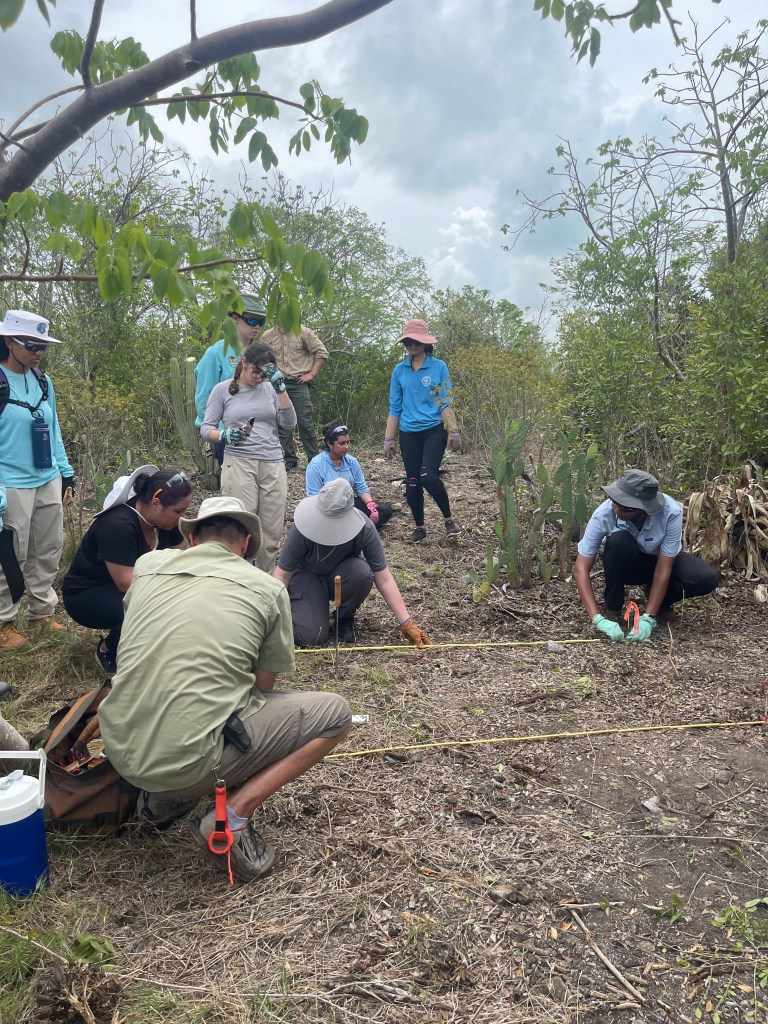
Since the site is organized in a grid system, Dr. Sinelli first used his compass and notes from his previous excavations to create a known point that he could then measure all the units we were going to open from, rather than having to trek all the way across the North side of the site to measure out each unit. Then he measured out 100cm in a square from the known point and placed stakes into the ground. He double-checked these measurements meticulously before running a piece of brightly colored string around the perimeter of the unit and marking it for us.
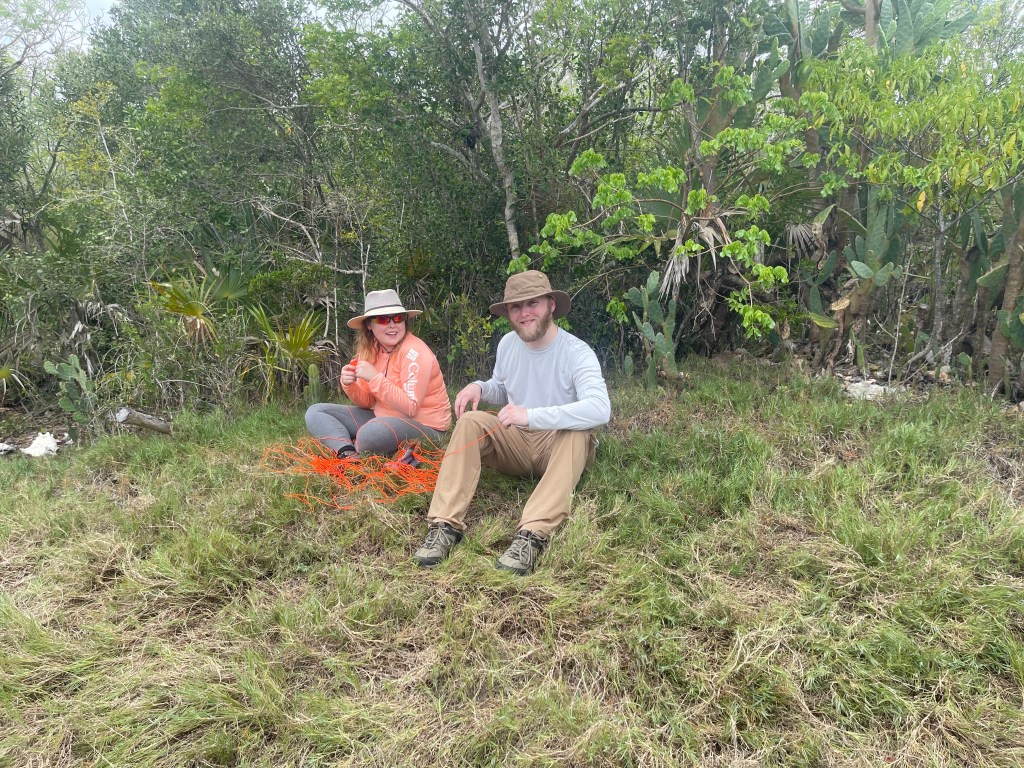
Of course with archaeology there is yet another measurement that needs to be accounted for: vertical space. After all we are digging in three dimensions. Using a nearby tree, Dr. Sinelli tied another datum point string. This one he placed a line level on and by pulling the string taut we could place it against a measuring stick and figure out the exact height or change in elevation of specific sections within the unit. Knowing these different heights helped later on with the analysis of the site and what we were finding. We measured each corner of the unit and then the center. After recording all of these measurements it was finally time to dig. We were instructed to carefully use our trowels and dustpans to scrape and dig 10 cm down into the ground from the lowest measurement. The lowest measurement being the highest point of the unit, if we are thinking three dimensionally. Every 10cm we were supposed to stop, remeasure, and then after getting the okay from either Dr. Sinelli or Mel, the PhD student, we would continue on to the next 10 cm, or “level”.
Clearing the first layer of any of the units was difficult but it was especially difficult on that first day because we were excited and wanted to get things going. Dr. Sinelli reminded us that we were trying to uncover artifacts layer by layer and that rather than getting ahead of ourselves we were supposed to “lower the aquarium” and bring the whole level down, not just a part of the unit. This was incredibly difficult when there were around 4-6 people working in that first unit. Those of us who weren’t digging were instructed to help in other parts of the excavation that I will get into next week.
As a side note: I spent this past week returning to my job at Osceola History as the Education Manager. Part of my week included a baking demonstration that I did for Spectrum 13 News. It aired on Friday as a segment of Florida On A Tankful and I got to talk a little bit about my dig, my time at UCF, and my interest in historic foodways!

 Baking the Past
Leave a comment