Unit 1 when it was first opened, seemed to be the most boring hole in the ground we had ever dug in. The dirt was black, pottery sherds were hard to find, and the hole was FULL of limestone. Digging in it, compared to the other units we opened up on the site, was like a chore. It was hard to get through and it just seemed to be one big rock pile.
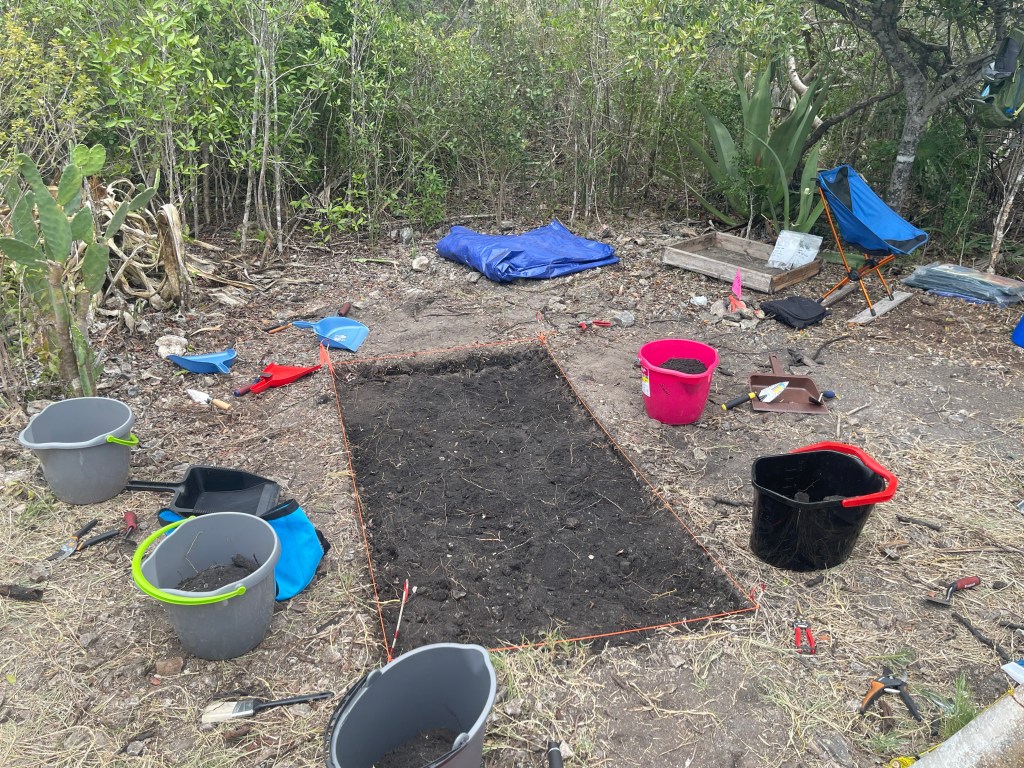
However, after finally hitting bedrock, about a week and a half into digging, Dr. Sinelli explained that what we were looking at was in fact not dirt at all but charcoal. Almost a foot and a half of charcoal and rocks piled on top of each other. We had in fact been excavating a giant oven.
Being a historic foodways fan myself, I was immediately fascinated by the sheer size of the oven and I spent several days reading through all the papers I could find on cooking stones and Taino foodways to try and figure out how exactly the oven was used. Dr. Sinelli explained that this type of oven was large enough to feed at least 200-300 people, and that the pottery sherds we found scattered around the site and throughout Unit 1 belonged to enormous cooking vessels. Throughout several of the units we uncovered sherds from pots as well as griddles.
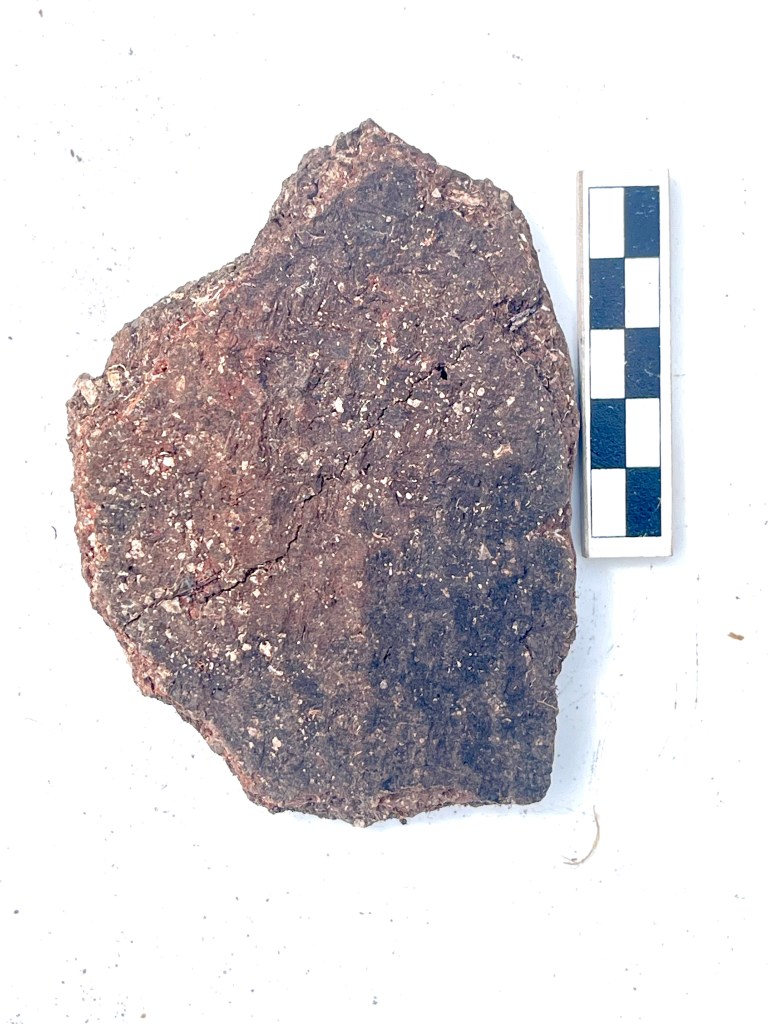
Dr. Sinelli had previously analyzed some of these cooking vessels and determined that there was evidence of starch residues on the sherds. This meant that tubers like manioc and zamia, ancestors of yucca and cassava, were part of the diet of the people living in Palmetto Junction. In addition to utilizing these cooking vessels, Dr. Sinelli believed that the layering of the rocks and the presence of the griddles showed that these tubers had been processed and cooked on the oven. Around the same time that we were learning all of this, the summer semester started and I knew exactly what I wanted my semester project to be.
After speaking to Dr. Sinelli, we decided that I would rebuild and cook on a reproduction earth oven, utilizing the materials we excavated. Of course we didn’t use the cooked limestone rocks, as those are cultural material and would break apart if exposed to high temperatures, but there were tons of cast-off stones around the site from road debris and along the salina that we could gather.
I had to learn as much about the actual construction of the oven itself, so for the first part of the project Dr. Sinelli had me measure the stones that we removed from Unit 1. All of them seemed to be around the same size, approximately 2 inches by 3 inches.
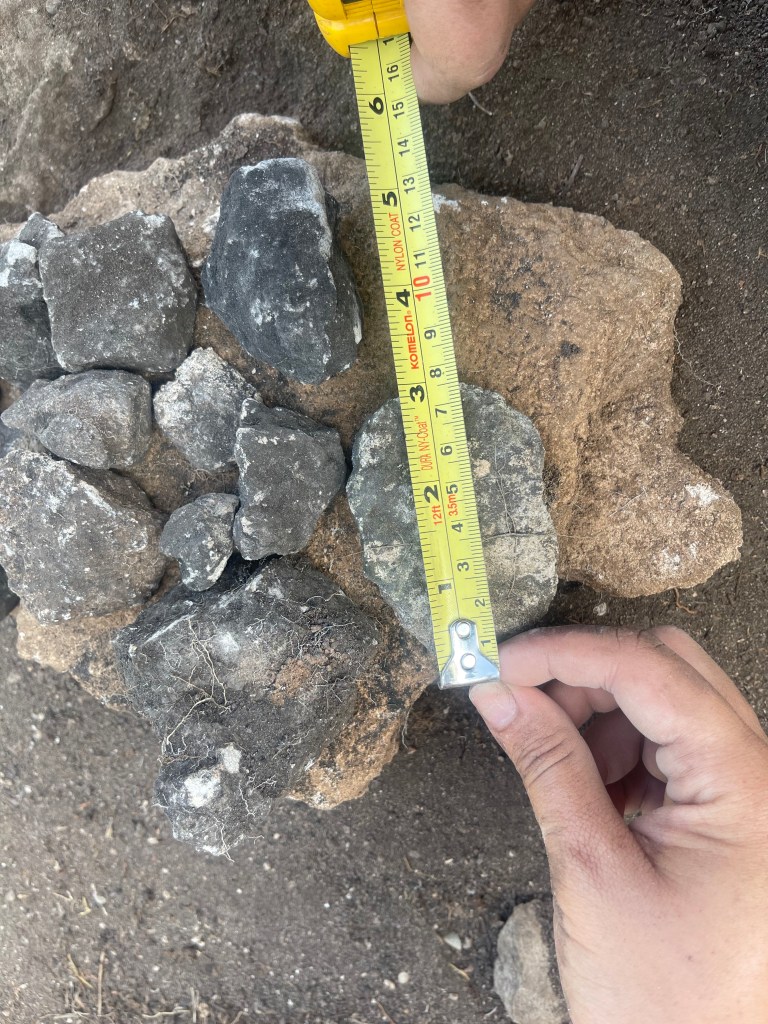
They were placed close together, creating an even surface across the unit. Which explained why it was so hard to excavate. When in use the layers were heated, and the rocks held onto the heat creating an even cooking temperature across a large area. One could rake charcoal across the oven to maintain a consistent temperature across a large area.
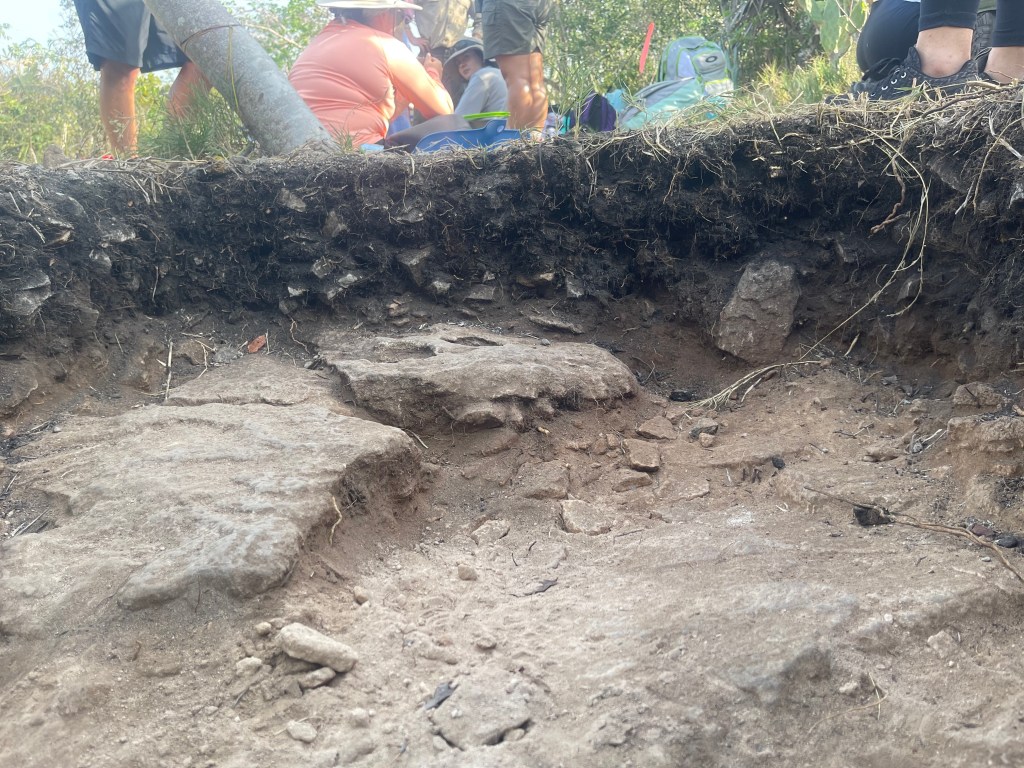
After learning how the oven was constructed, I began to look more into the evidence that we were finding in the different units to learn more about the Taino diet itself and what sort of foods were cooked at Palmetto Junction alongside the tubers.

 Baking the Past
Leave a comment