Every five or six days during our trip we got to take a break from waking up early and roasting alive in the Turks and Caicos sun for 6 to 7 hours. Instead we were able to have a leisurely breakfast and enjoy the day at the resort doing one of the most interesting and boring parts of the excavation process: lab work. Given that archaeology is a science, some lab work was expected however the lab work that we were able to participate in was a little different from the sterile analyses that one might think of when thinking of anthropologists holed up in their labs going isotopic analysis or carbon dating. Instead, we were assisting in the preservation process of the artifacts that we helped excavate.
Like anything in humid conditions like those underground, the artifacts we uncovered at Palmetto Junction were extremely delicate and breakable when left in a moist environment. Following the screening process, artifacts were placed in plastic bags labelled with the Site and the Dig Year and Unit Number, the Level Number and range, the Geographical coordinates, the Date of Excavation, and the Contents. For example, if you were labelling a bag of hutia bones it would look like this:
PJ-22-2
Level 2
22-32 cm
148S 103W
05/14/22
Hutia
This labelling system was critical for later site interpretation, and the labels on the artifact bags were grouped with the bag’s contents throughout the whole of its’ journey back to UCF. Unfortunately, that passage to UCF is fraught with many potentially destructive actions such as dropped artifacts, commonly being mistaken for limestone, and the most dreadful of all being sealed in a plastic bag where moisture can collect and either grow mold or break down precious pottery.
All artifact bags once filled with pottery sherds, bones, or shells were placed upright in an old screen with the top wide open to allow for moisture to evaporate. On Lab Day we each brought over a cookie sheet from our hotel room, grabbed a bag, filled a bucket with water, and scrubbed each sherd of pottery with a toothbrush trying to get as much dirt and vegetation as we could off the pieces. This would prevent organic material from “sweating” and breaking down pottery pieces or growing mold. After each piece of pottery was sufficiently “clean” we would place them on the cookie sheet and return them to Dr. Sinelli for either another bag or for the next step in the process.
All of the pottery pieces were removed from the cookie sheet, placed on paper that was labelled with the same information as the artifact bag. Then they were spread in a single layer and left to dry for several days until they were able to be placed back in the artifact bag and sealed, ready for transport.
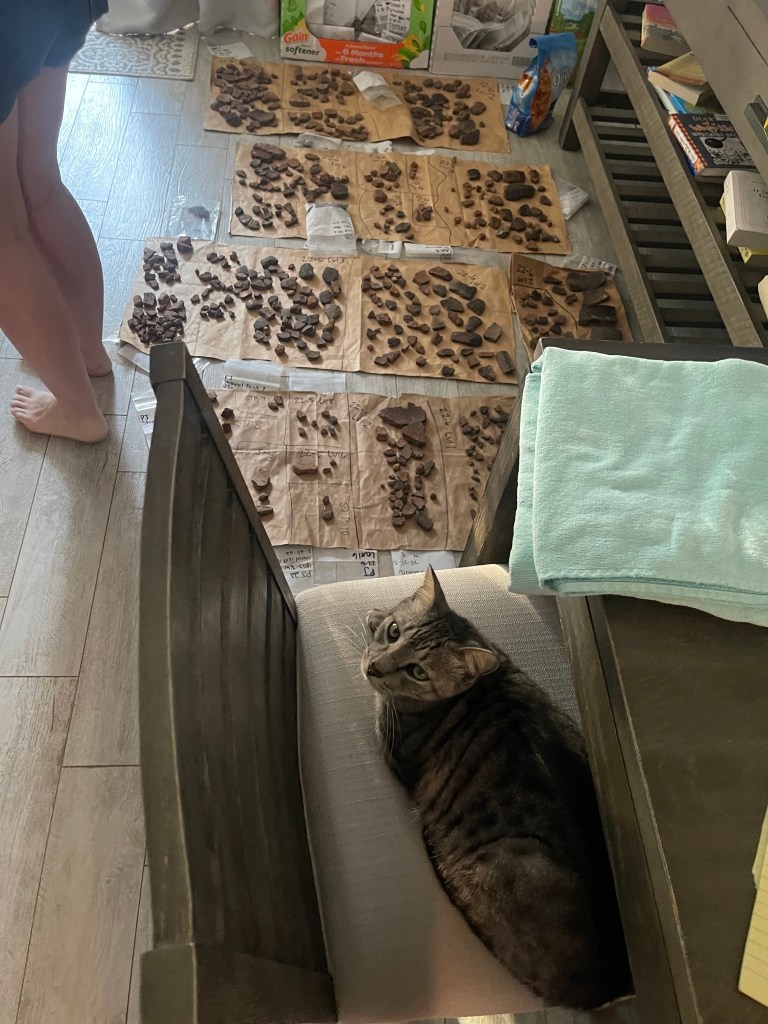
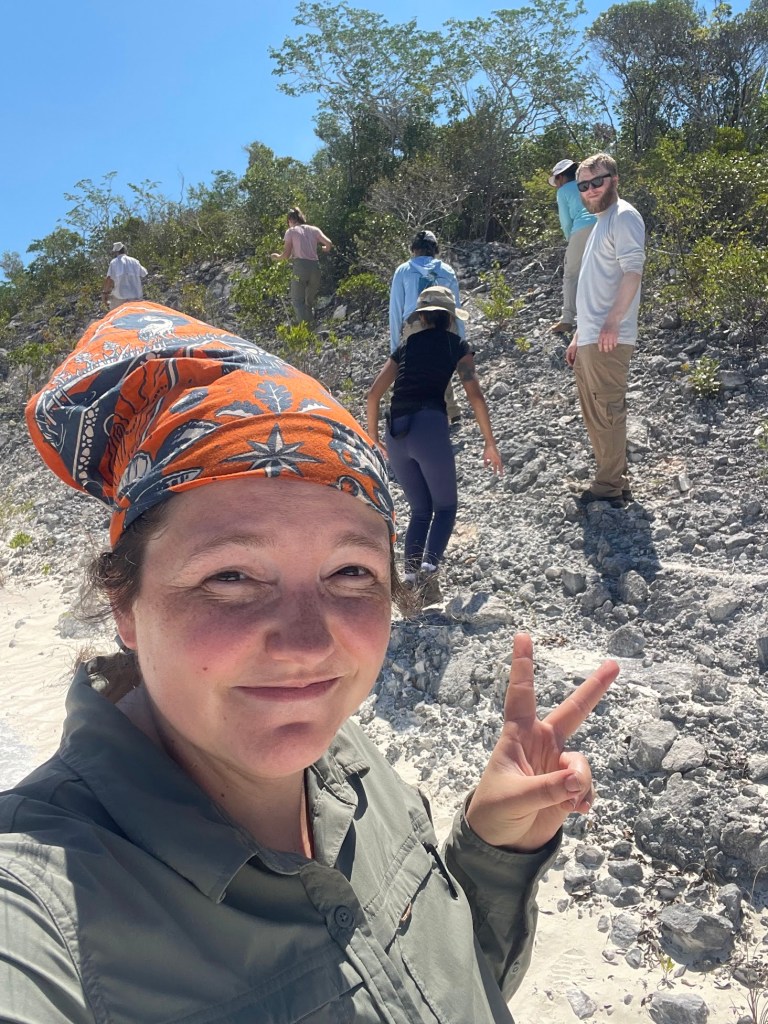
In addition to the pottery cleaning, Mel the PhD student had planned on doing some archaeological flotation, in an attempt to gather tiny artifacts from soil samples. Unfortunately, I only attended one full lab day due to being really really good at transecting and one of the only people not allergic to Poisonwood. Thus, I missed out on some of the more detailed labwork and instead got to go out to the field for extra days to saw and machete suspicious looking trees.

 Baking the Past
Leave a comment