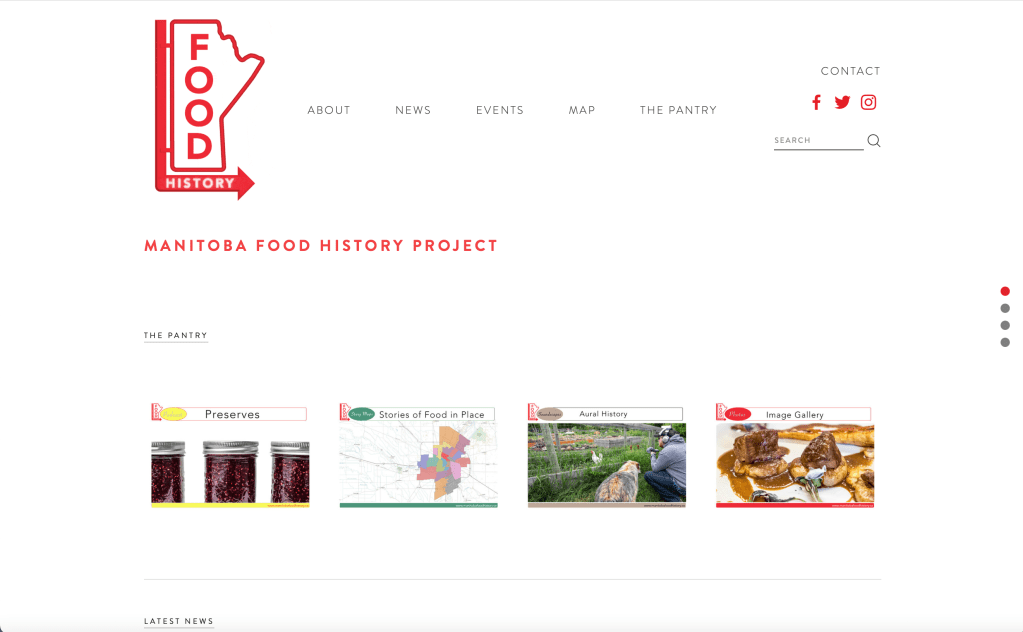
The Manitoba Food History Project is an interesting amalgamation of oral histories, Storymaps, and public history. Created by professor Janis Thiessen at the University of Winnipeg. At a time when food issues like climate change are on people’s minds, and the popularity of farmers markets and food festivals has become more of a mainstream weekend pastime, The Manitoba Food History Project aims to answer two distinct questions about local food history from around 1870 to the present day: “How has food been produced, sold, and consumed in Manitoba?” and “How has this changed over time?”[1]
Each summer University of Winnipeg students have the opportunity to learn on the job by signing up to work on a refurbished food truck turned kitchen/recording studio. Through this experience they record and produce an episode for the MFHP podcast: Preserves, which is published across a variety of platforms including Apple Podcasts and Spotify. Alongside the podcasts, The Manitoba Food History Project also has a significant social media presence which enables them to share their interview locations at events in real time as they are conducted. Due to the weather in Manitoba, the food truck has a limited season of use, but oral histories are still conducted, transcribed, and produced throughout the year.
In addition to the oral histories recorded in Preserves, MFHP has also begun producing Storymaps created by students about specific topics related to foodways in Manitoba. These Storymaps integrate soundbites from interviews with images, maps, and background information from primary and secondary sources. Using Storymaps gives site users outside the province of Manitoba a chance to gain some form of geographical understanding while inserting images from archives of local historical events, structures, and written documents showcasing life and culture in Manitoba.
The cross-platform approach to local food history allows students to gain skills that will be useful throughout their academic career while still utilizing tools like social media as an entry point to introduce students to the more complex digital tools like Storymaps. The unique “aural history” soundscapes created by Kent Davies, a collaborator with Thiessen on the project, engage listeners with the sounds of the project and allow users to hear the incredible sounds of cooking, talking, music, and sometimes geese in the background (see Link below). Listeners can share in the experience of The Manitoba Food History Project and the symphony of everyday life and gain a greater understanding of how the project is conducted, while also showcasing the nostalgia and evoking the emotions of listeners. Food is an emotional experience and while oral histories are an essential part of the work MFHP is doing, the cooking and recipe sharing is equally as important.
https://www.manitobafoodhistory.ca/northern-food: Reviewing The Manitoba Food History ProjectThe Manitoba Food History Project serves as a perfect example of the collaborative, interactive, and open-ended nature of digital projects. The concept of the project with its overarching themes and questions leaves the potential for new topics and unique perspectives to be heard and visualized in an ever-changing culinary landscape. MFHP gives voice to marginalized groups like First Nations chefs reclaiming the narrative of Northern Indigenous cuisine and showcasing the impact of immigrant groups in the 20th century, like the Greek population in Winnipeg and Burger restaurants. These seemingly individual podcast episodes are attached to greater perspectives, events, and movements in the Food community. From grocery store strikes against wages and gender discrimination to discussions of food fads, examining the history of Manitoba through the lens of food history shows how food has impacted Manitoban’s lives in significant ways outside the domestic or commercial kitchen.
The collection and sharing of local Manitoban history give the community a greater understanding of their deep roots and connections to Manitoba. The project also offers students the freedom to approach oral history, digital history, and podcasting in a way that matches their unique style and individual interpretations of this rich food history. The Manitoba Food History Project has suffered from the pandemic in terms of actively producing podcast episodes, but the recent introduction of Storymaps and recent activity on the MFHP Instagram give hope to more content being published on the project website soon.
Any projects hoping to combine oral histories, Storymaps, and public events should look to MFHP as an example of how to successfully involve communities in history gathering. The project’s focus does assist with the popularity of the project, given the exciting concept of cooking in a food truck while telling the stories of local and family history. However, this concept of interview collecting at public events and engaging interviewees in showcasing specific activities or skills could be utilized in other settings. Simply walking around communities and homes, showing individual histories and experiences could be equally as engaging.
[1] “About.” MANITOBA FOOD HISTORY PROJECT. University of Winnipeg. Accessed October 25, 2022. https://www.manitobafoodhistory.ca/about.
Thiessen, Janis. “The Pantry.” The Manitoba Food History Project. The University of Winnipeg. Accessed October 25, 2022. https://www.manitobafoodhistory.ca/pantry.

 Baking the Past
Leave a comment