For this next chapter on the project with Rollins Museum of Art, we decided to further breakdown and identify the pieces of art that we had chosen for the Teaching Portfolio. Like other groups, we had also received feedback from David Matteson about properly directing our portfolio toward teachers of K-12 schools. With this in mind, I began looking at the Science Standards for K-12, focusing on the K-5 science courses that I believed would be the most helpful to teachers for the project. Going through the other Florida Science Education Standards for the other grades was important, but I focused teachers of Elementary grades who are often searching for more resources and ways in which they can make their classes interdisciplinary. With so many learning styles, it’s important to create easy to understand lessons that students can enjoy and get something from. With the wordcount of the Introduction in mind, I simply included the reference numbers to the State Standards that could be elaborated on in a future blog.
Curriculum References for K-5, this selection courses shows how the application of this teaching portfolio can be utilized in any foundational course.
Kindergarten – SC.K.N.1.2, SC.K.N.1.4, SC.K.N.1.5
Grade 1 – SC.1.L.14.1, SC.1.L.14.2, SC.1.L.14.3, SC.1.E.6.3
Grade 2 – SC.2.L.14.1, SC.2.N.1.1, SC.2.N.1.5
Grade 3 – SC.3L.14.1, SC.3.L.17.1, SC.3.P.10.3, SC.3.P.10.4, SC.3.E.5.1, SC.3.N.1.1, SC.3.N.1.2, SC.3.N.1.3
Grade 4 – SC.4.L.17.2, SC.4.L.17.4, SC.4.P.9.1, SC.4.E.6.5, SC.4.N.1.2, SC.4.N.1.8
Grade 5 – SC.5.L.14.2
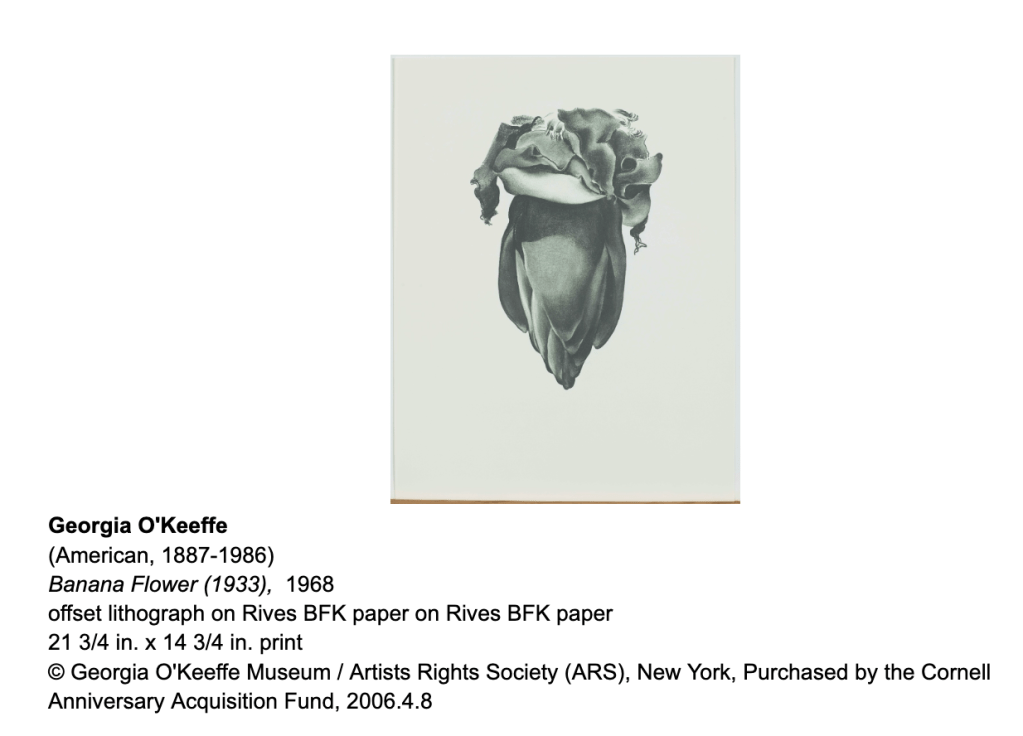
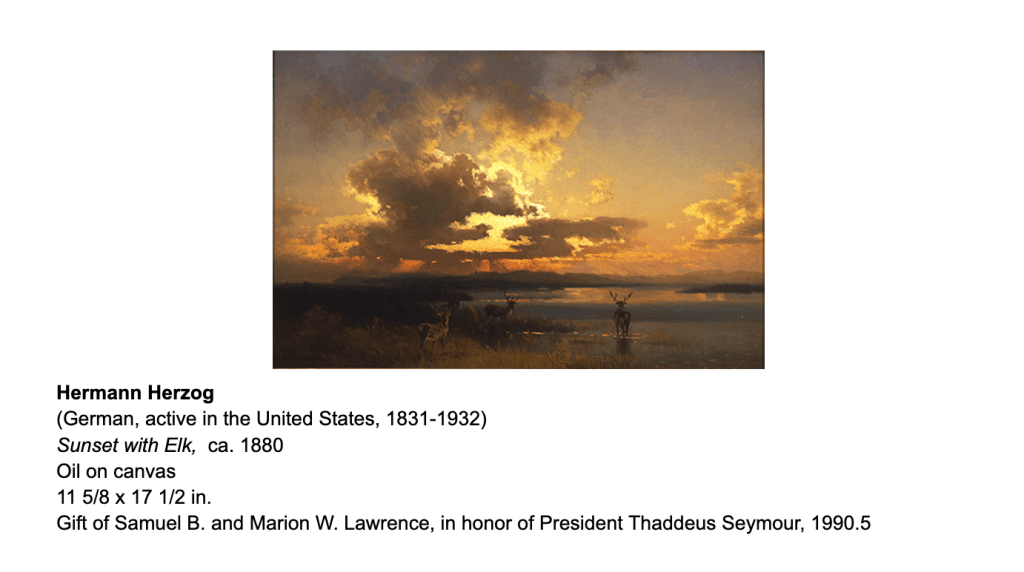
Each of these standards focuses on several of the scientific techniques that teachers, whether art or science look to when teaching students about subjects like the movement of light seen in Hermann Herzog’s Sunset with Elk, the importance of pictorial evidence like Georgia O’Keefe’s Banana Flower, and the collaboration needed between scientists to forward the progress of scientific research and understanding. While these basic foundations of the scientific process appear less and less in the Education Standards after 4th grade, they are a useful base for teachers to show how the natural world progresses.
For our Introduction, Randi, Dev and I collaborated on the brief overview of the portfolio and came up with this:
“Artists have used their mediums to portray the world around them as they see it. During the Renaissance, artists were more than painters and sculptors; they were also scientists and anatomists. The Renaissance inspired all artists to have a grasp of both the ethereal and the physical realm. Understanding the natural world has not only allowed artists to accurately portray precisely what they see in a more realistic fashion but allowed them to make connections between the natural world and humanity. The human form, nature, the cosmos, and wildlife have inspired this collection of works: Science and the Natural World. as the Renaissance was known for connecting the spiritual and real world.
The advancements seen throughout the Renaissance inspired the study of the human body and nature which allowed artists to portray more lifelike, realistic, and detailed human figures, buildings, and plants than their predecessors. This ‘Scientific Revolution’ was heralded by connections between the rapidly advancing sciences and arts. Art was included as a part of this intellectual revolution that all 19th-century doctors and surgeons needed to understand in order to better grasp anatomy. Scientists today still utilize their understanding of the world through art as a way to design figures as small as DNA molecules and as large as entire solar systems.”
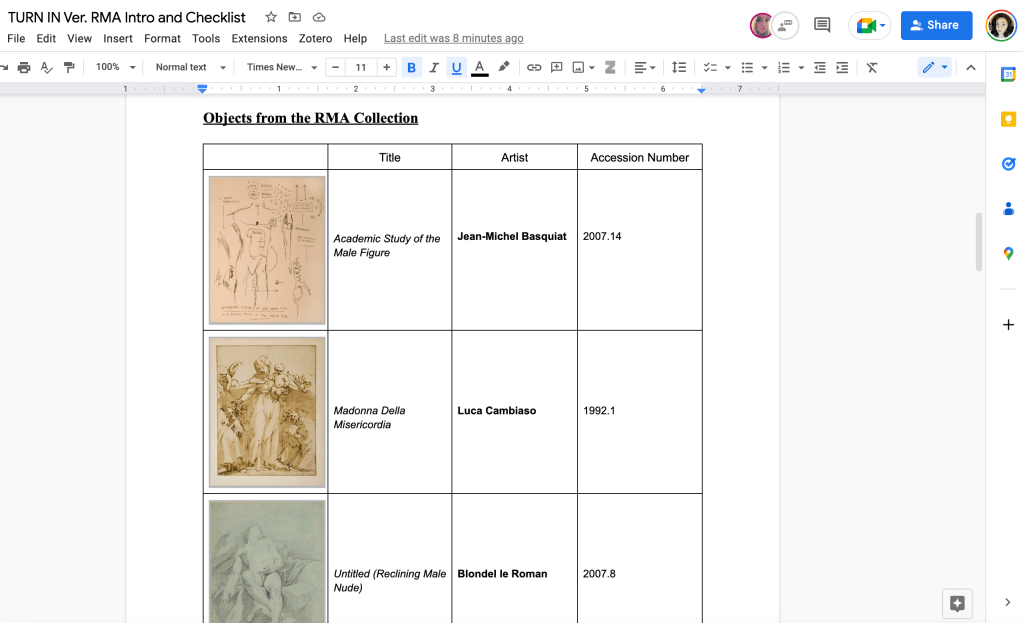
After creating the Introduction, Dev took the pieces we had previously found and after looking through the Rollins catalogue discovered a few more that would fit the chosen theme. Randi then organized them into a chart and we filled in the information together. This process, while time consuming, made the portfolio easier to visualize and has provided excellent references for how we can organize and create a better flow throughout the portfolio of the descriptions and uses of each of the paintings.

 Baking the Past
Leave a comment