Hello all! The first week of my internship was all about figuring out the first few assignments that I was going to be working on and tying together the research I was creating with some upcoming events over at the Kitchen House. To share a bit more about the kinds of curriculum, activities, and research I’ll be completing allow me to share a little about how some of the Education programs at the Edible Education Experience work.
First, the students arrive at the Kitchen House where staff and volunteers are introduced and a brief introduction of how the class is going to go, along with expectations and rules is gone over. This generally includes safety rules, identifying the bathrooms, and the general plan for where and what is coming next. Then, students proceed into the front room where they watch a demonstration and learn about a specific topic. In the ancient Egypt class I participated in this past summer, this was a brief lecture on the kinds of food that was found in ancient Egypt as well as the different agricultural techniques that ancient Egyptians used. Then, the hands-on demonstration allows students to help an educator prepare a dish that students sample.One of the wonderful parts of these lectures is that there is a certain element of interdisciplinary connection, teaching geography, ecology, and cultural history to students while connecting it to their lives in Florida.
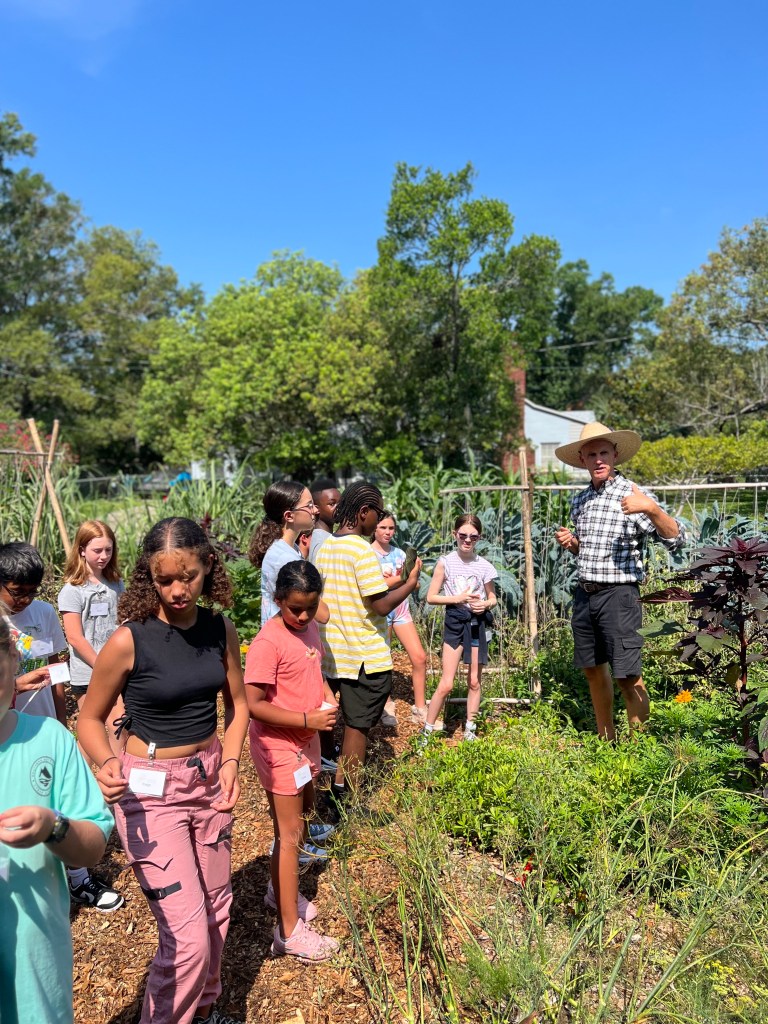
This is furthered by the next step in the program which is the garden education focus. Brad, the Garden Educator, takes students into the garden to learn about the edible plants that they will be working with, building on the ecological focus from the lecture and highlighting the importance of farming and vegetables in everyone’s diet. Teaching students about plant-based foods is a tenet of EEE, and important for many of the school and community groups they educate as many of these students come from homes where healthy eating may take a backseat over convenience, cost, or geographical location.
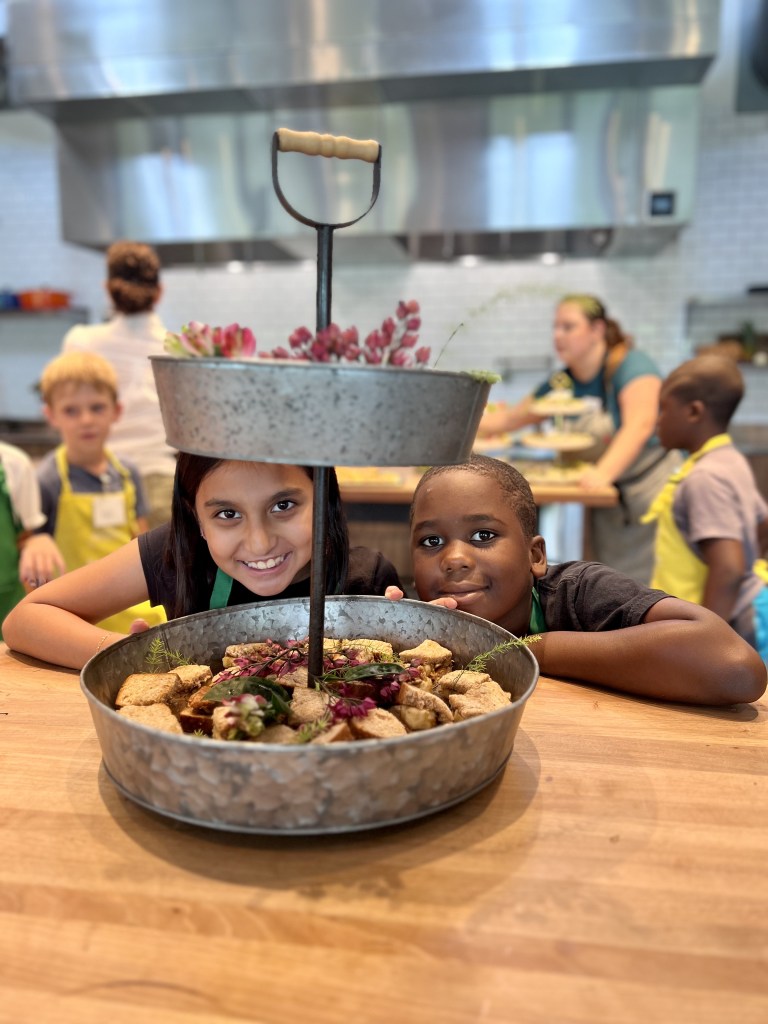
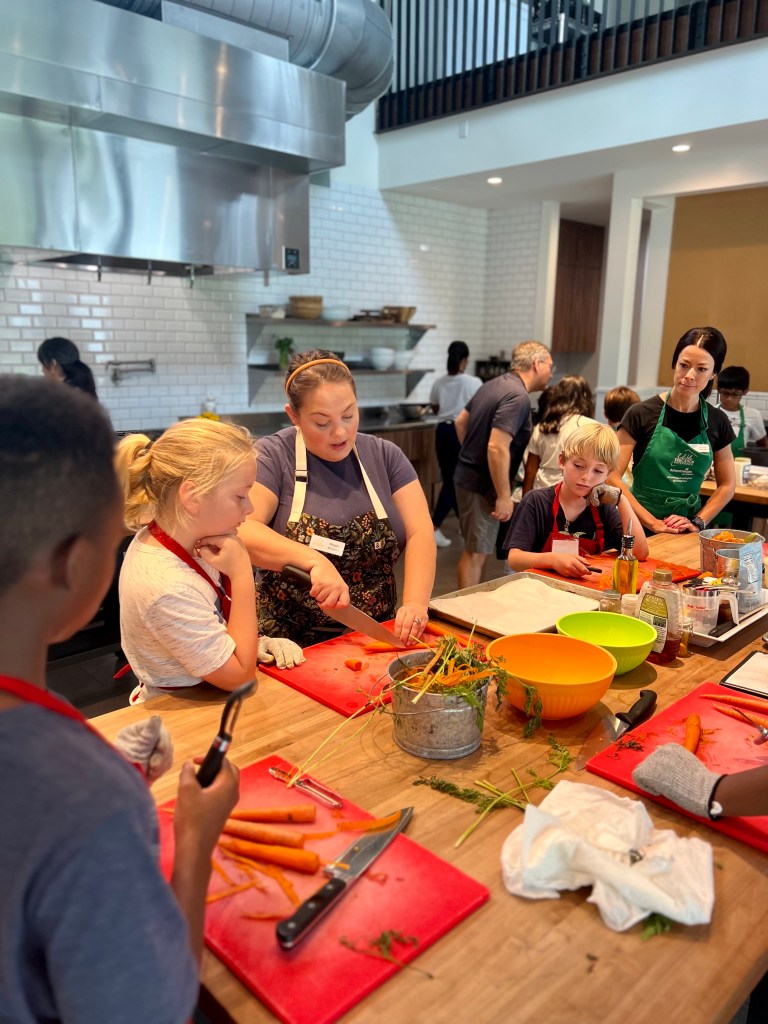
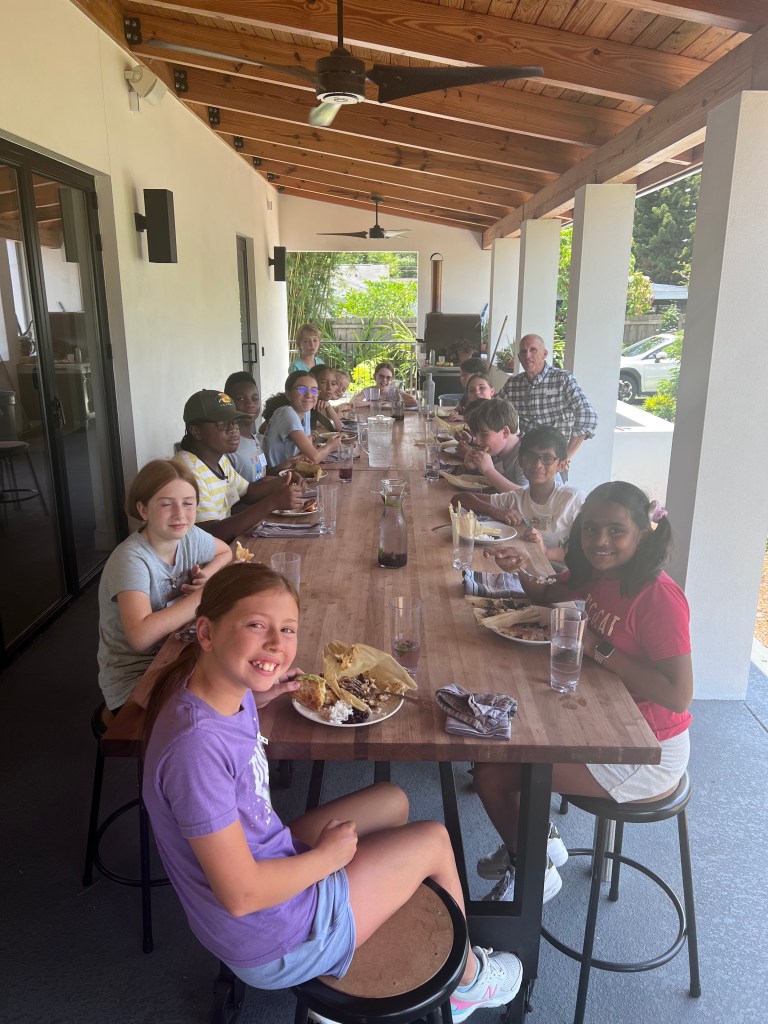
Following the garden section, students will then be broken up into teams and will be assigned a dish to prepare, themed around the topic they learned about with the help of volunteers and educators. This section teaches students how to cook and allows them to focus on highlighted and demonstrated techniques like knife-cutting skills which are foundational for those learning to cook. Once completed, the students all get to sit down, talk about what they learned, and eat a healthy meal that all of them prepared together.
Incredibly rewarding to be a part of, this program allows for students and volunteers to work together to complete a product that they can be proud of and encourages healthy eating all tied together through education. Educating in this manner is perfect for the topic of food history, allowing students to engage with new foods and ingredients they’ve never tried before and also highlighting how similar the foods of historical actors is to our modern diet.
This first topic that I will be working on researching is one very near and dear to my heart: the Middle Ages. One of the first topics that peaked my interest in food history, the time-range will allow me to research the changes in agriculture and how events like the Crusades impacted cuisine highlighting cooperation and trade alongside the more popularly known aspects of the medieval period.

 Baking the Past
Leave a comment