With my first curriculum under my belt it’s time to begin working on the second one of the semester; Southern cooking. This is a section of food history that I am much less knowledgeable about. When first beginning my research on this topic I went through my bookshelves and found I only own one book on southern cuisine: The Potlikker Papers: A Food History of the Modern South by John T. Edge. I originally purchased book because of the author’s connection to the Southern Foodways Alliance thinking that this would be a good addition to my collection given that I had decided I wanted to attend their fall symposium last year. (It should be noted that I was unable to attend last year but I’ve already made plans to attend the one next month in Mississippi.)
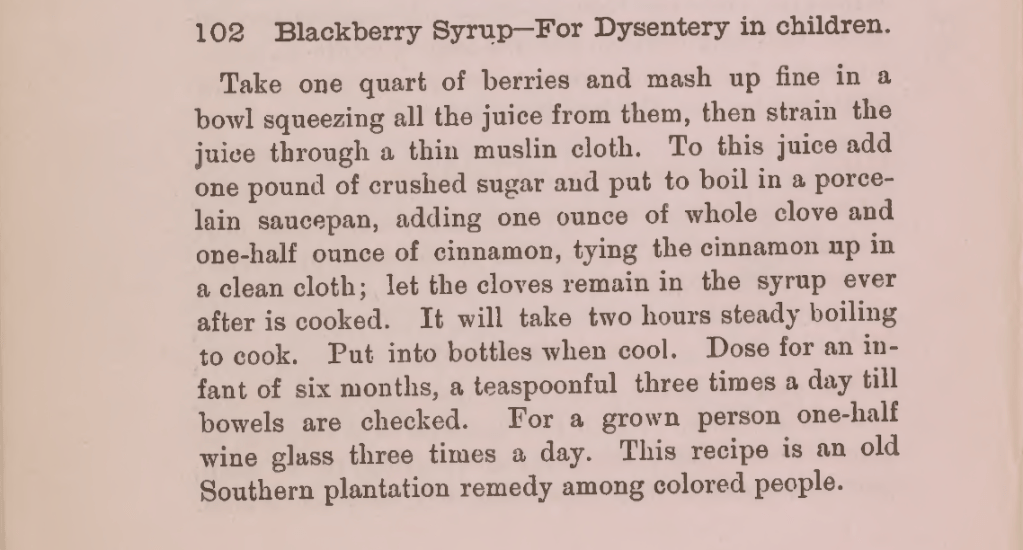
I am from Kansas and thus more familiar with the culture of Midwestern casseroles and Kansas City BBQ than I am with Southern fare, but I think that building a curriculum focused on a topic I’m unfamiliar with will be beneficial for my own experience in developing Education programs and figuring out what the most relevant and digestible parts of a single historical period really are for a specific audience, in this case educators teaching children. So after a meeting with Megan who pointed me to a few texts, I looked into the book What Mrs. Fisher Knows About Old Southern Cooking. This book was published after the 1879 Sacramento State Fair, the digitized version on the Library of Congress database is from 1881 and is believed to be the second cookbook written by an African American woman, the first being a book by Malinda Russell from 1866. The manuscript features recipes ranging from basics like meringue and pie crust to techniques for roasting meat, salads, to “Blackberry Syrup – for Dysentery in Children”. The inclusion of this last recipe is not entirely unheard of in 19th century cookbooks I’ve seen it before in other cookbooks as early as the 1820s and as late as the early 1900s. Given the personal nature of many cookbooks, domestic servants, enslaved women, and free women alike would utilize the herbs, plants, and foods around them as convalescent foods and home remedies. What is unique is that there is only one medicinal recipe in Mrs. Fisher’s book and it’s located in an odd section in the middle of the book labeled “Preserves, Spices, Etc.”.
According to the Michigan State University Digital Repository entry on Abby Fisher, this recipe in particular is unique not only because of its content but because of her mention of plantation life. I have shared an image of the recipe below, what do you make of it?
In addition to looking through Mrs. Fisher’s book I also took a brief look at the public history media available on the South and started watching Netflix’s High on the Hog. This series, based on a book by the same name by food historian Jessica B. Harris takes a look at American history and the origins of quintessential “American cuisine,” tracing the true origins of some of the country’s most well-known foods through the exploitation of enslaved individuals. Understanding the history of inequality in American food and the history of institutionalized racism through foodways is going to be eye-opening. The more I learn, the more I realize I do not know, I hope that I have enough time to really grasp the deep and rich history that I am learning for the first time and I hope I can do it justice.
Bibliography
Edge, John T. The Potlikker Papers: A Food History of the Modern South, New York: Penguin Books, 2017.
Fisher, Abby, and Katherine Golden Bitting Collection On Gastronomy. What Mrs. Fisher knows about old southern cooking, soups, pickles, preserves, etc. San Francisco: Women’s Co-operative Printing Office, 1881. Pdf. https://www.loc.gov/item/08023680/.
Harris, Jessica B. High on the Hog: A Culinary Journey from Africa to America, Bloomsbury USA, 2012.
Rachman, Anne-Marie, “Abby Fisher,” Michigan State University Libraries Digital Repository, accessed September 16, 2023, https://d.lib.msu.edu/msul/76.

 Baking the Past
Leave a comment